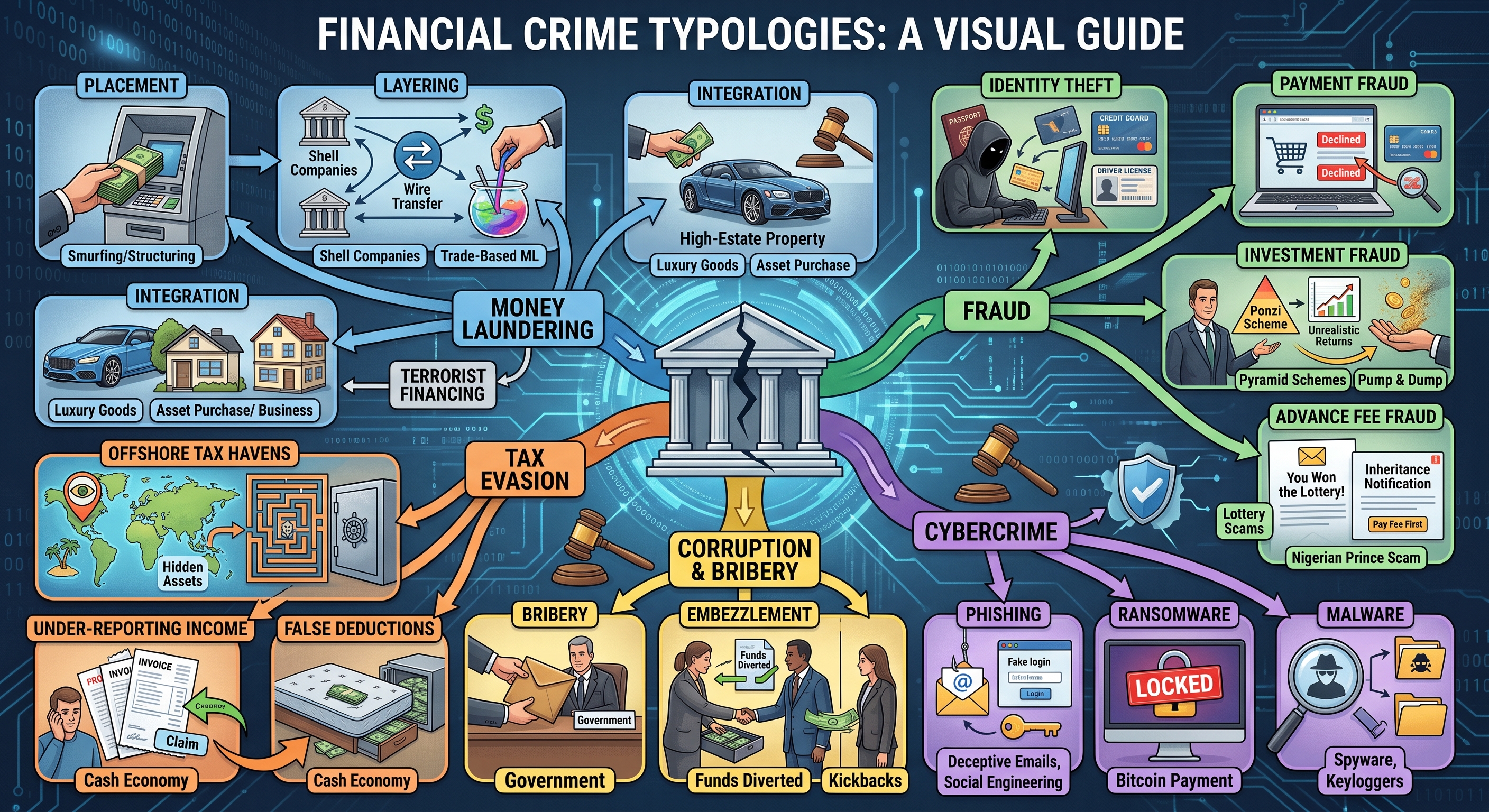
Financial Crime Typologies: Understanding the Threats to Your Organization
Financial crimes pose a significant threat to organizations, causing substantial financial losses and reputational damage. In this article, we will delve into the different types of financial crimes, their characteristics, and prevention strategies.
What are Financial Crimes?
Financial crimes refer to illegal activities that involve financial transactions or the manipulation of financial information. These crimes can be committed by individuals, groups, or organizations and can result in significant financial losses and reputational damage.
Types of Financial Crimes
1. Money Laundering
Money laundering is the process of disguising the origin of illicit funds to make them appear legitimate. This can be done through various means, including the use of shell companies, offshore accounts, and complex financial transactions.
2. Corruption
Corruption involves the use of power or influence to obtain financial benefits or favors. This can include bribery, embezzlement, and other forms of abuse of power.
3. Cybercrime
Cybercrime involves the use of technology to commit financial crimes. This can include hacking, identity theft, and phishing scams.
4. Market Manipulation
Market manipulation involves the use of false or misleading information to influence financial markets. This can include insider trading, pump and dump schemes, and other forms of market manipulation.
5. Terrorist Financing
Terrorist financing involves the provision of financial support to terrorist organizations. This can include the use of charities, shell companies, and other means to provide financial support to terrorist groups.
Prevention Strategies
Preventing financial crimes requires a multi-faceted approach that involves both internal controls and external measures. Some prevention strategies include:
-
Implementing robust internal controls, such as anti-money laundering (AML) and know-your-customer (KYC) policies
-
Conducting regular risk assessments and audits to identify potential vulnerabilities
-
Providing training to employees on financial crime prevention and detection
-
Implementing technology-based solutions, such as transaction monitoring and anomaly detection systems
-
Collaborating with external partners, such as law enforcement agencies and financial intelligence units
Conclusion
Financial crimes pose a significant threat to organizations, causing substantial financial losses and reputational damage. Understanding the different types of financial crimes and implementing effective prevention strategies are critical to mitigating this risk. By staying informed and proactive, organizations can protect themselves from financial crimes and maintain their reputation and integrity.